iPhone Mobile VR in 2026: Turning Your Smartphone into a Spatial Engine
Transform your iPhone into a VR headset in 2026. Detailed guide on streaming via Chrome and downloading files to PLAY’A VR. Professional specs and pricing included.
1. Introduction: The Unstoppable Power of the "Pocket VR" Engine
By 2026, the smartphone in your pocket—specifically the iPhone 15 through the latest iPhone 17 Pro—possesses more graphical power and pixel density than the dedicated VR headsets of five years ago. While Apple has pivoted to the Vision Pro for high-end spatial computing, Mobile VR remains the most accessible way for millions to enjoy 360° documentaries, virtual tours, and immersive cinema.
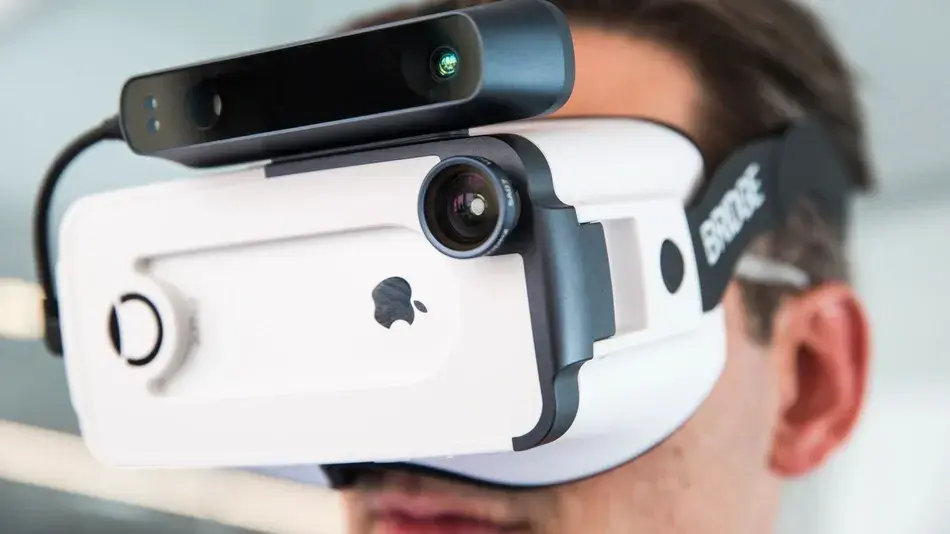
Using an iPhone as a VR device relies on a "Shell" or "Wrapper" (like Google Cardboard or a plastic VR Box) to split the screen into a stereoscopic view for your eyes.
2. Technical Specs: Why the iPhone is a VR Beast
In 2026, the hardware inside an iPhone is perfectly tuned for low-latency, high-fidelity media consumption.
| Feature | iPhone 16/17 Pro Standards | Impact on VR |
| Display Type | Super Retina XDR (OLED) | Perfect blacks and high contrast for immersion. |
| Pixel Density | ~460 ppi | Minimizes the "Screen Door Effect" (SDE). |
| Refresh Rate | 120Hz ProMotion | Reduces motion sickness during head rotation. |
| Sensors | High-G Accelerometer & 3-axis Gyro | Precision 3DoF (Degrees of Freedom) tracking. |
| Processor | A18 / A19 Bionic | Effortless 8K 360° video decoding. |
Technical Note: Mobile VR on iPhone is primarily 3DoF. This means the headset tracks where you look (Up, Down, Left, Right) but does not track your physical movement through the room (Walking/Leaning).
3. 2026 Pricing: VR Shells and Adapters
Since the "engine" is your phone, the hardware cost is remarkably low. Here are the 2026 market prices for iPhone-compatible VR shells:
| Device Type | Example Model | Estimated Price (USD) | Build Quality |
| Entry-Level | Google Cardboard V2 | $10 - $15 | Cardboard (Disposable) |
| Mid-Range | Merge VR / VR Box | $30 - $50 | Plastic / Adjustable Lenses |
| Premium Shell | Zeiss VR One Plus | $80 - $120 | High-end Optics |
| Bluetooth Controller | Universal VR Remote | $15 - $25 | Essential for navigation |
4. Pros and Cons of iPhone VR
The Pros
-
Zero Extra Cost: You already own the most expensive part—the phone.
-
Portability: A cardboard shell fits in a backpack; the phone is in your pocket.
-
Screen Quality: iPhone OLED screens often have better color reproduction than mid-range dedicated VR headsets.
-
No Charging (Headset): You only need to keep your phone charged.
The Cons
-
3DoF Only: No "room-scale" movement.
-
Ergonomics: Phone-based headsets can be front-heavy and lack proper weight distribution.
-
Phone Heat: Intensive VR apps can cause the iPhone to throttle performance or drain battery quickly.
-
Notifications: Incoming calls or texts can break immersion unless "Do Not Disturb" is active.
5. Instructional Guide: Streaming and Downloading
To get the most out of your iPhone VR in 2026, you need to know how to handle high-bitrate content. Follow these steps for the smoothest experience.
Method A: Direct Streaming (Instant Play)
Best for quick viewing of 360° trailers or web-based VR content.
-
Open Chrome: Launch the Chrome browser on your iPhone.
-
Access Media: Navigate to your preferred VR video site.
-
Initiate Playback: Touch the Play button on the video.
-
Enter VR Mode: On the video player, locate and touch the VR Mode Icon (resembling a pair of goggles 🥽). The screen will split into two circles.
-
Insert Phone: Place your iPhone into your VR headset shell and adjust the lenses.
Method B: High-Quality Download (Offline Viewing)
Best for 4K/8K files where buffering would ruin the experience. We recommend using the PLAY’A VR app.
-
Install App: Download and install PLAY’A VR from the App Store.
-
Download to PC: Download your VR video file (
.mp4or.mkv) to your computer. -
Connect & Transfer:
-
Connect your iPhone to your computer (via USB-C).
-
Open Finder (Mac) or iTunes/Apple Devices App (Windows).
-
Go to the "Files" or "File Sharing" menu.
-
Drag the downloaded VR file into the PLAY’A VR folder.
-
-
Launch App: Open the PLAY’A VR app on your iPhone.
-
Locate Media: Select Local Files from the bottom menu bar. Your video will be there, ready for high-performance playback without internet lag.
6. Summary: The Verdict for 2026
While the world focuses on $3,000+ spatial computers, the iPhone remains the "everyman's" gateway to VR. In 2026, if you want a high-resolution, portable movie theater experience without the bulk of a dedicated headset, an iPhone paired with a quality plastic shell is a surprisingly powerful solution.